

No Farmers No Production
The word “agriculture” comes from the Latin word agricultura; which is the marriage of words ager (field) and cultura(cultivation). That is no mere coincidence that the word itself comes from “culture”. In Turkish, this bond is even more explicit: the word ekin means both “crop” and “culture”.
The dawn of settled history was the spark of culture, and that spark was lit by agriculture. Therefore the development of humankind owes a debt to the first ever settled job: farmers. It is possible to say with every invention coined afterwards, many started to see agriculture as redundant compared to the “great fields” of their centuries. Well, we still could not replace the constant democratic need of nutrition from elsewhere. The persistent decline in the state and status of the farmers globally seems to be boiling the pot now.
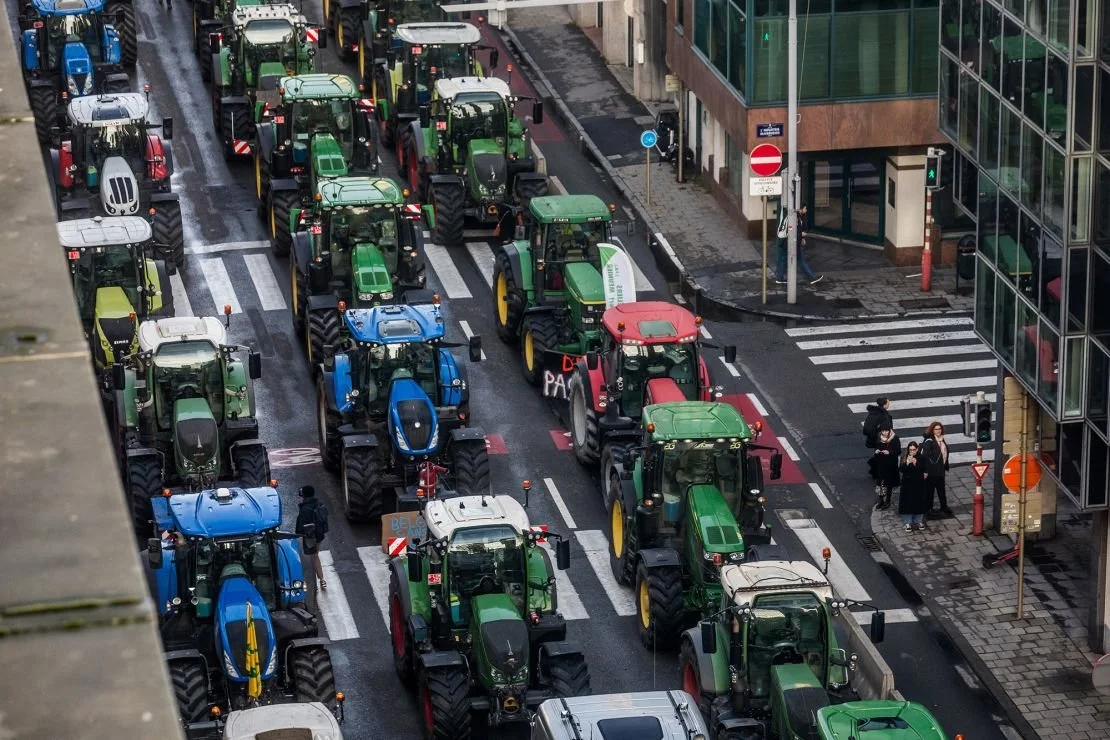
The calendar marks December 18th, and the map points to Brussels. Just as the big boards of EU rolling up their sleeves for their trade agreement with Mercosur, the noises outside got a little louder than usual. The Belgian police estimates around 1,000 tractors with Belgian number plates and up to 7,000 protestors. Well, bigger protests had happened but 1,000 tractors change the game. Have you ever stood beside one? Literally and figuratively, massive reminders of the scale of the work being defended.
So, the trade agreement seems pretty beneficial for both parties: EU and Mercosur (Brazil, Argentine, Uruguay and Paraguay) — although dismissing many important points. With the agreement the EU will be able to import cheaper agricultural products from the Latin American market, decrease dependency on China, and expand industrial exports. Whereas Mercosur will gain easy access to Europe market, increase agricultural exports and well, will make some money along the way. So everything seems to be perfectly in line and sensible. A total “win-win” situation on paper. Is it?
So, what is it for the European farmers, that they are bold enough to barge in Brussel with 1,000 tractors? I believe it is due to the fact that European agriculture is defined by strict, expensive environmental frameworks. It is clear why this creates an uneven competition between the local farmers and the imported Latin American goods. So it is not “we hate the environmental guidelines” but “how would you expect us the go on with cheaper products entering the market when the costs are already exorbitant for us to make a living.”
The meeting has been pushed to January 2026, and now we are at the wait. This one passes, the world will move on. Then another will be signed. The world will move on. Another agreement… Repeat. Where does this actually end? At which point people actually starve? Hard to say, anyway, may the crisis swell, right? Trade will continue nonetheless, but how long food producers can absorb its costs before production itself collapses. Maybe we can eat “trade”.